Read the paper
HaulGuard reads the physical shipping paper and extracts the load information for review.
Hazmat paperwork is often checked from memory, a regulation book, and the time available at the dock. When something is wrong, it may not surface until the scale house—or until the load is already moving.
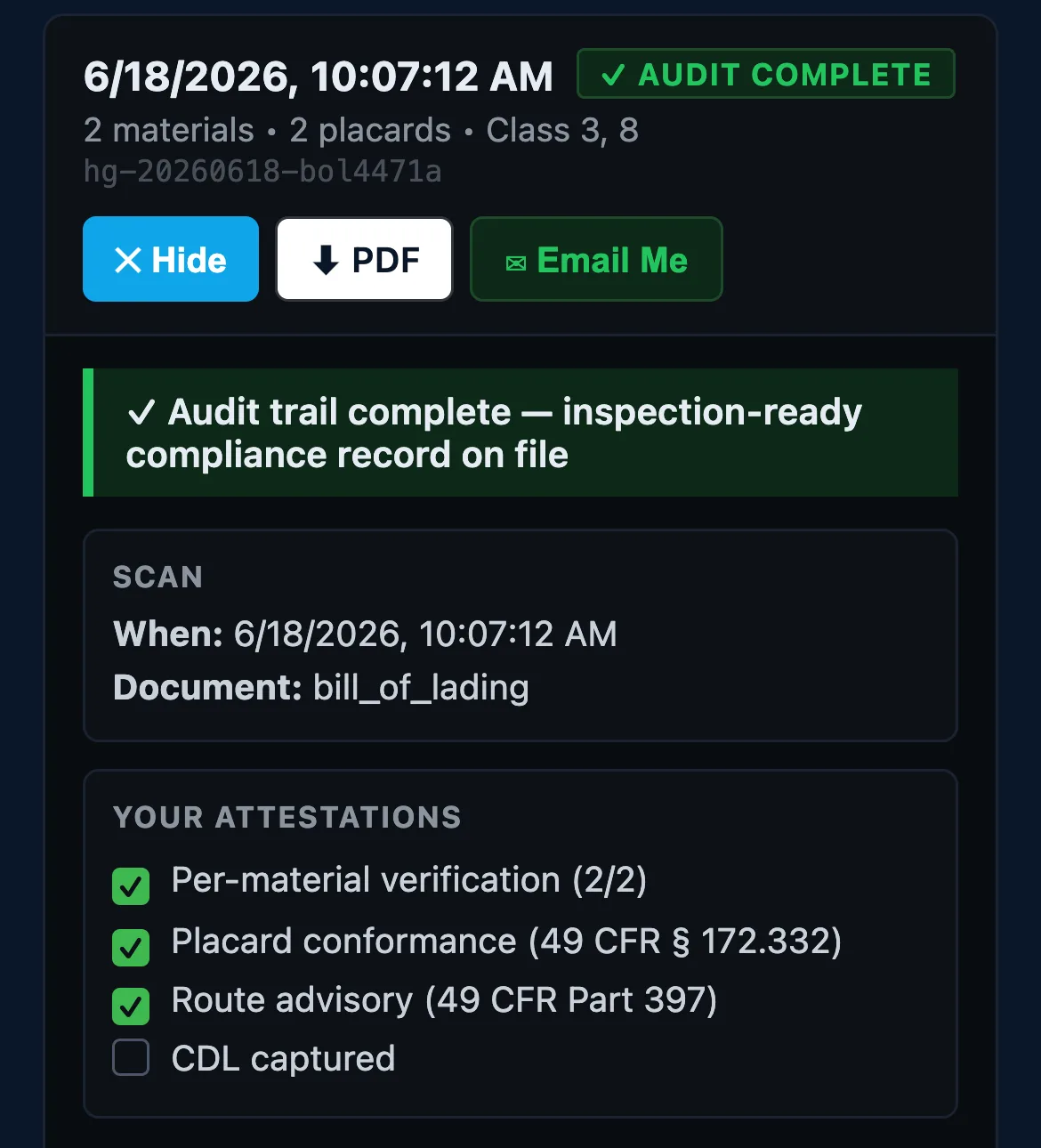
A driver has a shipping paper in hand and a practical question: what placards does this load require, and can these materials ride together? The answer can depend on the description, hazard class, packing group, quantity, packaging, and exceptions spread across 49 CFR.
A correct answer made from memory can still be hard to reconstruct later. A mistake may wait for an inspector at roadside or a receiver at the dock to find it. HaulGuard is built to move that review forward—and leave behind a record of what was checked.
Each layer has one job. The AI does not get the final word, and the result is not a black-box verdict.
HaulGuard reads the physical shipping paper and extracts the load information for review.
The driver checks the extracted information against the paper and corrects what the AI missed.
Placard and segregation determinations carry the controlling 49 CFR citation instead of asking you to trust an unexplained answer.
Every scan produces an inspection-ready Evidence Packet backed by an append-only SHA-256 hash-chained ledger.
The Evidence Packet brings together the paper as read, the driver’s verification, the cited reasoning, and the audit trail. Its chain integrity can be checked at haulguard.ai/verify without a HaulGuard account.
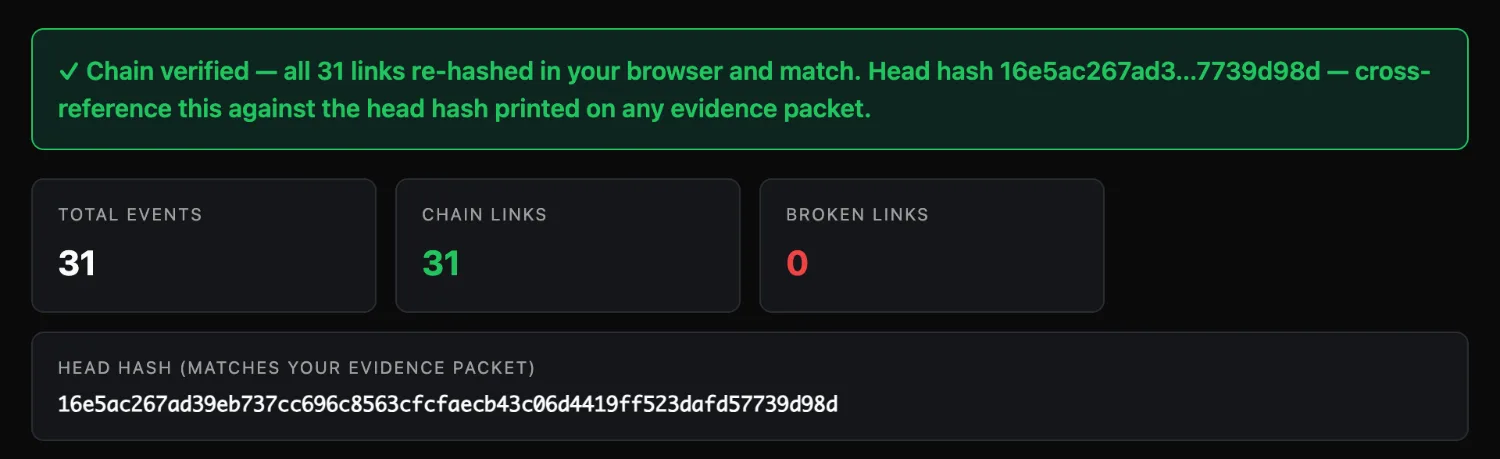
The public verifier re-hashes the audit chain in the visitor’s browser and compares the result with the head hash printed on the Evidence Packet.
HaulGuard does not replace hazmat training. It does not certify compliance. It does not turn best-effort AI extraction into legal authority.
The driver still makes the call. Every field must be checked against the paper, because the driver’s verification—not the AI—is the legal record. If a question remains open, the Evidence Packet should show it rather than hide it.
That boundary is not fine print. A compliance tool should make responsibility clearer, not blur it.
Scan a real shipping paper, or use the free lookup when you only need one UN/NA reference.